
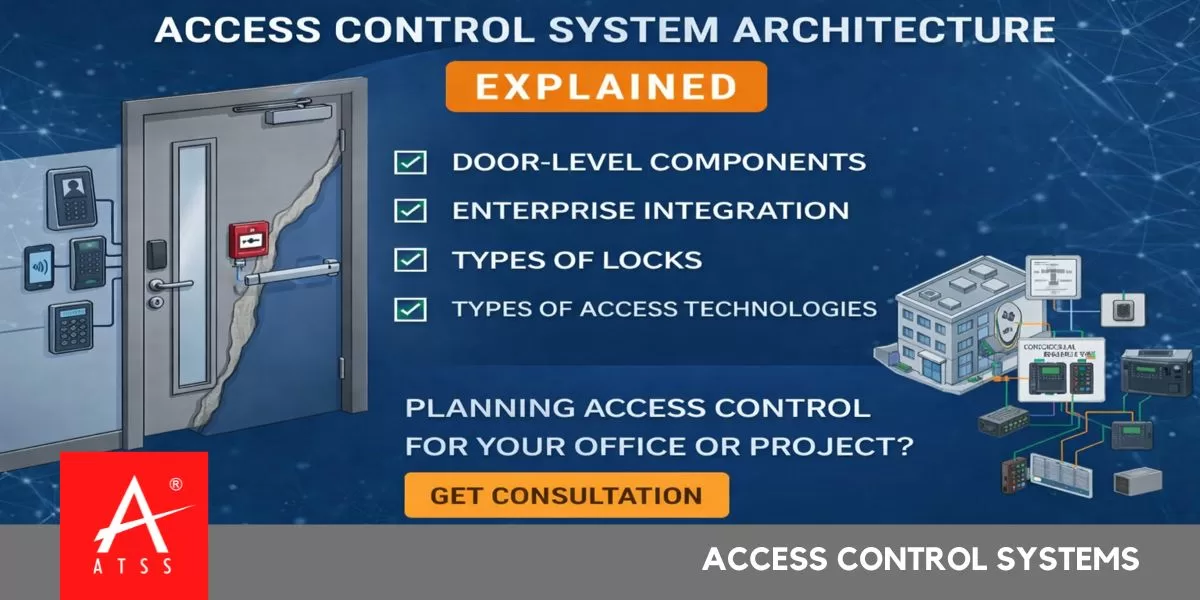
Access Control System Architecture Explained: Door-Level to Enterprise Integration
Access Control Systems for homes & businesses. Secure entry with RFID, biometric & mobile access. Expert installation & support in Chennai, India.
Why Access Control is No Longer Optional
In today’s enterprise and high-value residential environments, security is no longer just about locking doors—it’s about intelligent control, visibility, and automation.
Traditional locks have evolved into AI-enabled, networked access control ecosystems that integrate with fire systems, CCTV, and building management platforms.
This blog breaks down a complete access control architecture, from door-level components to building-wide system integration, helping decision-makers, consultants, and system integrators understand how modern security infrastructure works.
What is an Access Control System?
An Access Control System (ACS) is a security solution that regulates who can enter or exit a specific area based on authentication methods such as:
- RFID cards
- Biometric verification
- Mobile credentials
- PIN codes
Unlike traditional locks, access control systems provide:
- Real-time monitoring
- Audit trails
- Centralized control
- Integration with other security systems
Door-Level Architecture: The Foundation of Security
Every access control system begins at the door level, where authentication and physical locking mechanisms operate.
1. Non-Secure Side (Outside Area)
This is where user authentication happens.
Key Components:
- Card Reader / Keypad
- Biometric Reader (Facial/Fingerprint)
- BLE/NFC Mobile Credential Access
- PIN Entry Keypad
Authentication Methods Explained
RFID / Proximity Cards
- Widely used in offices and apartments
- Cost-effective and scalable
- Moderate security level
Biometric Authentication
- Fingerprint or facial recognition
- High security, eliminates card sharing
- Ideal for restricted zones
Mobile Access (BLE/NFC)
- Smartphone-based entry
- Convenient and modern
- Increasing adoption in smart buildings
PIN-Based Access
- Simple and affordable
- Often used as backup authentication
2. Secure Side (Inside Area)
Once access is granted, internal components ensure safe exit and monitoring.
Key Components:
- Exit Push Button (Request-to-Exit)
- Emergency Break Glass Unit
- Door Contact Sensor
- Door Closer
Why These Matter:
- Exit Button: Ensures safe and controlled exit
- Break Glass: Critical for emergency evacuation
- Door Sensor: Detects door open/close status
- Door Closer: Maintains door integrity
Door Hardware: Fail-Safe vs Fail-Secure Explained
Choosing the right locking mechanism is critical for safety and compliance.
Fail-Safe Lock (Electromagnetic Lock)
- Unlocks when power is lost
- Used in emergency exits
- Ensures safety during fire or power failure
Best Use Cases:
- Offices
- Hospitals
- Public buildings
Fail-Secure Lock (Electric Strike Lock)
- Remains locked during power failure
- Used where security is critical
Best Use Cases:
- Server rooms
- Vaults
- Restricted zones
Types of Locking Mechanisms
Electromagnetic Locks (Mag Locks)
- Operate on magnetism
- Strong holding force
- No moving parts → low maintenance
Electric Strike Locks
- Installed within door frame
- Works with mechanical locks
- Better aesthetics and flexibility
Wiring & Communication Infrastructure
A reliable access control system depends on robust connectivity.
Key Wiring Types:
- UTP (Cat6 Cable): Data communication
- RS485: Device communication protocol
- Power Lines: Supply to controllers and locks
Why It Matters:
- Ensures real-time communication
- Reduces system latency
- Supports scalability
Building-Level System Topology
Beyond individual doors, access control systems operate at a network and enterprise level.
Core Components:
1. Access Control Panel / Controller
- Brain of door-level operations
- Processes authentication data
- Controls locks
2. Local Supply Controllers
- Distributes power to devices
- Ensures system stability
3. Network Switch
- Connects controllers to server
- Enables IP communication
4. Central Access Control Server
- Stores user data
- Manages permissions
- Generates reports
5. Power Supply with Battery Backup
- Ensures uninterrupted operation
- Critical during power failures
Data Flow in Access Control Systems
Understanding the data flow helps in system design and troubleshooting.
Step-by-Step Flow:
- User Authentication (Card/Biometric/Mobile)
- Reader sends data to Controller
- Controller communicates with Server
- Server validates permissions
- Decision sent back to Controller
- Door Unlocks / Denies Access
? This entire process happens in milliseconds, ensuring seamless access.
Integration with Other Systems
Modern access control systems are not standalone—they are part of a larger security ecosystem.
1. Fire Alarm System Integration
- Automatically unlocks doors during fire
- Ensures safe evacuation
2. Building Management System (BMS)
- Monitors door status
- Tracks alarms and events
3. CCTV Integration
- Triggers recording on access events
- Provides visual verification
Key Features of Advanced Access Control Systems
1. Access Authorization
Define who can enter where and when.
2. Event Logging
Track every entry and exit.
3. Time-Based Access
Restrict access based on schedules.
4. Anti-Passback
Prevents card misuse.
5. Alarm Monitoring
Detect forced entry or door held open.
Access Technology Comparison
| Technology | Speed | Range | Security | Convenience |
|---|---|---|---|---|
| BLE Mobile | Fast | 2–10m | High | Very High |
| RFID Cards | Medium | 3–6m | Medium | High |
| Biometrics | Medium | 4–6m | Very High | Medium |
Materials & Equipment Required
A complete access control system includes:
- Controllers
- Readers
- Locks
- Power supplies
- Network cables
- Rack-mounted systems
Use Cases Across Industries
1. Corporate Offices
- Employee access control
- Attendance integration
2. Residential Villas & Apartments
- Smart entry systems
- Visitor management
3. Industrial Facilities
- Restricted zone access
- Safety compliance
4. Hospitals
- Controlled access to sensitive areas
- Emergency evacuation support
Design Considerations for Implementation
1. Security Level Assessment
- Identify critical areas
- Define access hierarchy
2. Scalability
- Plan for future expansion
3. Redundancy
- Backup power and network
4. Compliance
- Fire safety norms
- Data privacy regulations
Common Mistakes to Avoid
❌ Using wrong lock type (Fail-safe vs Fail-secure)
❌ Poor wiring and cable management
❌ No integration with fire alarm system
❌ Ignoring backup power
❌ Lack of centralized monitoring
Future Trends in Access Control
1. AI-Based Facial Recognition
- Contactless and fast
- Increasing adoption
2. Cloud-Based Access Control
- Remote management
- Reduced infrastructure
3. Mobile-First Access
- Replacing physical cards
4. IoT Integration
- Smart building ecosystems
Why Businesses in Chennai are Adopting Advanced Access Control
With increasing demand for:
- Smart buildings
- Enterprise security
- Compliance standards
Companies are investing in integrated access control solutions that provide both security and operational efficiency.
Conclusion: From Doors to Intelligence
Access control is no longer just about restricting entry—it’s about:
✔ Visibility
✔ Automation
✔ Integration
✔ Intelligence
A well-designed system transforms a building into a secure, intelligent environment.
Planning Access Control for Your Office or Project in Chennai?
Get a free system design consultation tailored to your requirement.
? Call / WhatsApp: 9150012345
? Visit: www.atss.in
FAQ
1. What is access control system architecture?
It is the structure of components and network used to manage and control access to physical spaces.
2. What is the difference between fail-safe and fail-secure locks?
Fail-safe unlocks during power failure, while fail-secure remains locked.
3. Which access control is best for offices?
RFID + biometric hybrid systems are ideal.
4. Can access control integrate with CCTV?
Yes, it enables event-based recording and monitoring.
Panasonic Video Door Phone | Smart Door Locks | Parking Management System | Biometric For Attendance | Cctv Surveillance Cameras | Security Systems For Home | Smoking Detector